WellCommand™
Predictive Well Intelligence
wellcommand.ai/weekly-command
A WellCommand™ Weekly Brief

From the Rig Floor Report

Edition No. 08 Week of August 25–31, 2026 Coverage Deepwater Appraisal · Brownfield Acceleration · Integrated Contracting

The U.S. count did not move this week — 588 rigs, unchanged — but the composition did: oil down five to 447, gas up five to 132. That flat headline hides the more interesting story in the week’s announcements. BP took an integrated contract to appraise a discovery it already made. Eni committed to 230 wells in a country it has drilled for decades. Aker BP brought three fields on a year early. Almost none of this week’s capital went looking for new rock.

Five verified items from the week of August 25–31, every date and figure checked against a primary or trade-press source. Where a contract value was not disclosed, we say so rather than estimate. Here’s what mattered on the floor.

This Week on the Floor
Deepwater Appraisal Drilling Contractor · August 25, 2026

BP hands Halliburton one contract for the whole Bumerangue appraisal — planning, drilling and evaluation together

Halliburton won an integrated contract covering BP’s first appraisal campaign at Bumerangue, in the Santos Basin offshore Brazil. The scope puts well planning, drilling execution and formation evaluation under a single execution model, so evaluation data feeds operational decisions during the campaign rather than after it, and Halliburton will run its LOGIX automation and remote-operations stack on the work. The discovery well, 1-BP-13-SPS, sits 404 km from Rio de Janeiro in 2,372 m of water, reached a TD of 5,855 m, and cut the reservoir roughly 500 m below the crest of the structure. Neither party disclosed value or duration.

Why it matters

Splitting planning, drilling and evaluation across vendors is how a rig ends up with three versions of the same wellbore and no one accountable for the discrepancy. Bundling them is an admission that in deep water the expensive failure is rarely a tool — it is a decision made on stale information. Appraisal at 2,372 m is exactly where the cost of finding out late is highest.
Read the source →
Brownfield Strategy Drilling Contractor · August 27, 2026

Eni commits to 230 wells in Egypt — and routes them through infrastructure that already exists

Meeting President El-Sisi at New Alamein on 25 August, Eni CEO Claudio Descalzi laid out a campaign of 30 exploration and 200 development wells across the Mediterranean and Western Desert, including Zohr, extending through 2026 and 2027. Eni’s investment in Egypt now stands at $8.5 billion, against roughly 242,000 boed produced in 2025 through subsidiary IEOC. The stated emphasis is “fast-track” work — volumes that can be brought on using existing plants and connections — plus life extension on producing fields, with advanced seismic and AI applied across the campaign. It builds on the October 2025 offshore Mediterranean programme that produced the Denise West discovery in Temsah in April 2026.

Why it matters

Note the ratio: roughly seven development wells for every exploration well. This is not a wildcat programme dressed up as one; it is a decision that the cheapest molecule available is the one you can tie into a plant you already own. Fast-track economics live or die on whether existing facilities behave as modelled — which makes the integrity and behaviour of aging infrastructure the binding constraint, not the drilling.

Read the source →
Execution Drilling Contractor · August 26, 2026

Aker BP brings three Norwegian Sea fields on stream a full year early

Alve Nord, Idun Nord and Ørn started production one year ahead of schedule for Aker BP — three subsea tie-backs delivered early in a mature offshore province where schedule slippage has historically been the norm rather than the exception.

Why it matters

A year of early production on three fields is the single largest value item on this list, and it came from execution rather than discovery. It is worth being precise about what that means: on a tie-back, the schedule is won or lost in the interfaces — between the new wells and the host, between the drilling programme and the subsea scope. Pulling a year out means those interfaces were understood before steel moved, not renegotiated after.

Read the source →
Inventory Drilling Contractor · August 28, 2026

Ovintiv adds 240 drilling locations across the Permian and Montney

Ovintiv expanded its drilling inventory by 240 locations in the Permian Basin and the Montney — two of the most thoroughly characterised plays in North America. The addition is a land and portfolio move rather than an exploration result: more places to drill wells whose behaviour is already well understood.

Why it matters

Inventory in a known play is a bet on repeatability. It only pays if the hundred-and-first well behaves like the first hundred, which is a data and process question long before it is a geology question. The operators who convert inventory into returns are the ones whose per-well variance keeps falling as count rises.

Read the source →
Frontier & Late Life Drilling Contractor · August 27–28, 2026

The counterweight: Nabors takes the largest stake in Quaise, and North Sea decommissioning work expands

Two items sit at the opposite ends of the asset life cycle from everything above. Nabors became the largest shareholder in geothermal drilling developer Quaise Energy, deepening a contractor’s position in a drilling market that does not exist at scale yet. At the other end, Well-Safe Solutions and NMC Energy expanded their North Sea decommissioning alliance, and Spirit Energy completed a three-well North Sea abandonment campaign. Transocean Equinox also spudded the Juliet-1 exploration well offshore Australia — one of the week’s few genuine steps into unknown rock.

Why it matters

Frontier drilling and plug-and-abandonment are the same engineering problem viewed from opposite ends: both are dominated by uncertainty about what the wellbore will actually do, and in both the cost of being wrong is measured in days of rig time. A contractor buying into geothermal and an alliance scaling decom are hedging the same thing — that the conventional middle of the market is where competition is fiercest.

Read the source →
588
U.S. rigs, week to Aug 28 — no change (Baker Hughes)
447
U.S. oil rigs, down 5 on the week
132
U.S. gas rigs, up 5 on the week
282
Texas rigs — highest since February 2025
230
Wells in Eni’s Egypt campaign (30 expl. / 200 dev.)
$8.5B
Eni investment in Egypt to date
2,372 m
Water depth, BP Bumerangue discovery well
1 yr
Aker BP schedule pull-forward, three fields

Sources: Drilling Contractor (August 25, 26, 27 & 28, 2026); Baker Hughes North America Rotary Rig Count (data through August 28, 2026); Halliburton press release (August 25, 2026). Figures verified against primary and trade-press sources within the coverage window August 25–31, 2026. Contract values were not disclosed and are not estimated here.

Set the week’s items side by side and the pattern is hard to miss. An appraisal campaign, not an exploration one. Two hundred development wells against thirty exploration wells. Two hundred and forty locations in two plays that have been drilled thousands of times. Three fields brought on early. Two decommissioning announcements. One frontier spud.

The rig count was flat, but the money rotated toward rock that is already understood. That is a rational posture late in a cycle, and it changes where the risk actually lives. When you drill unknown rock, the danger is geological. When you drill known rock through existing facilities, the danger is that something in the system behaves differently than the model says it will — a tie-back interface, an aging plant, the hundred-and-first well that is not like the first hundred.

Aker BP’s year is the number worth sitting with. It was not won by drilling faster. It was won by knowing, before mobilisation, how the pieces would interact — which is the same discipline that separates a fast-track brownfield programme that delivers from one that discovers its constraints on location.

That is the WellCommand™ thesis restated by a week of other people’s announcements. The premium in this market is not in finding more; it is in being surprised less by what you have already found.

Get the brief before the bit turns.

From the Rig Floor Report lands every week — verified drilling intelligence, no vendor spin.

Subscribe · wellcommand.ai/weekly-command
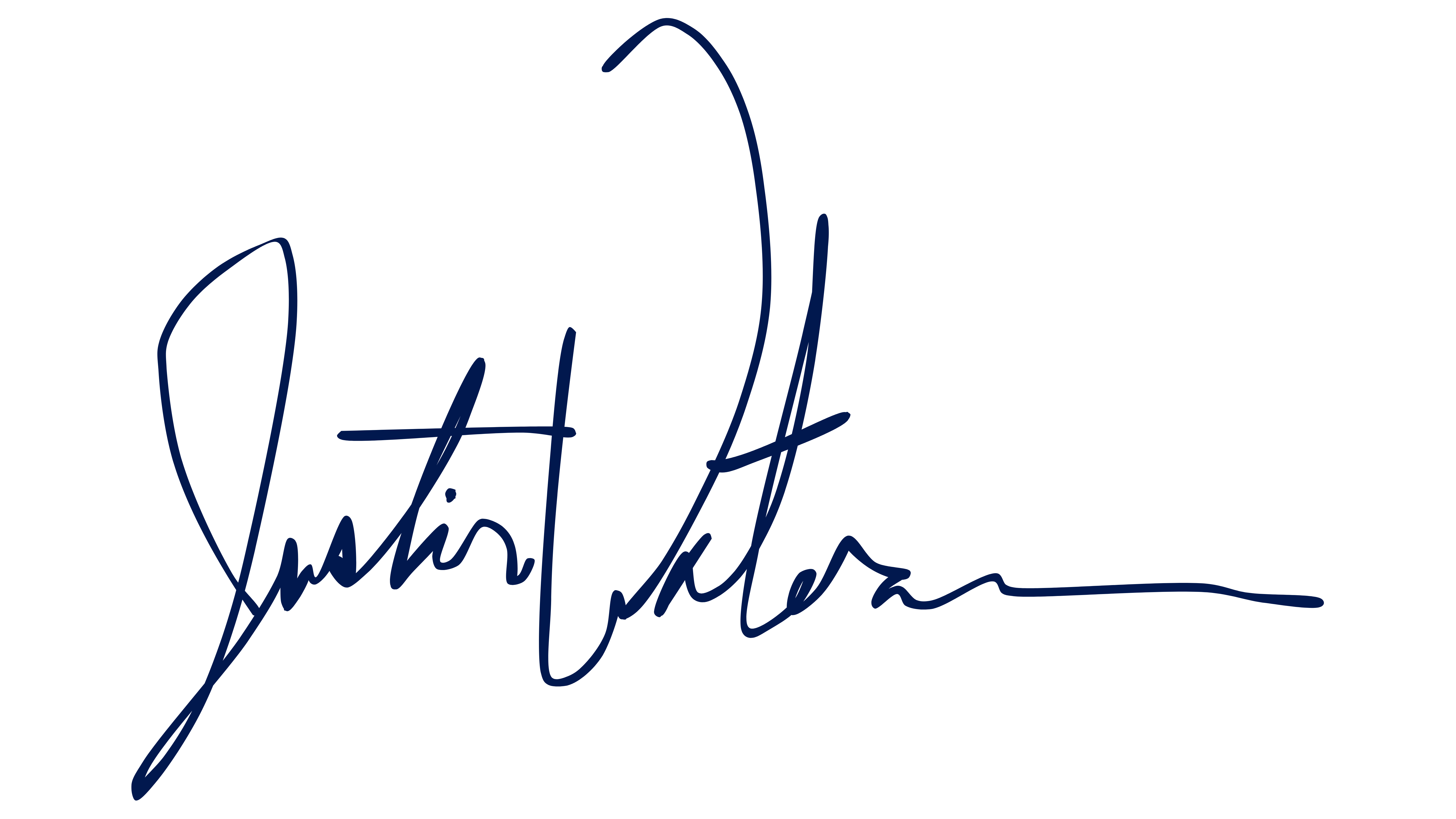
Justin J. Waterman signature
Justin J. Waterman, PMP
WellCommand™ — Predictive Well Intelligence
Founder & Inventor · info@wellcommand.ai

About the Author

Justin J. Waterman Founder, Waterman Consulting Services · Inventor, WellCommand™

“Built on the Rock. Engineered for the Future. Forward Always.”

Justin J. Waterman is a Houston-based operator who builds the systems the work actually runs on — construction and owner’s-representative programs, predictive intelligence for drilling, and the AI infrastructure underneath both. He writes From the Rig Floor Report each week for the people doing the work, not the people describing it.